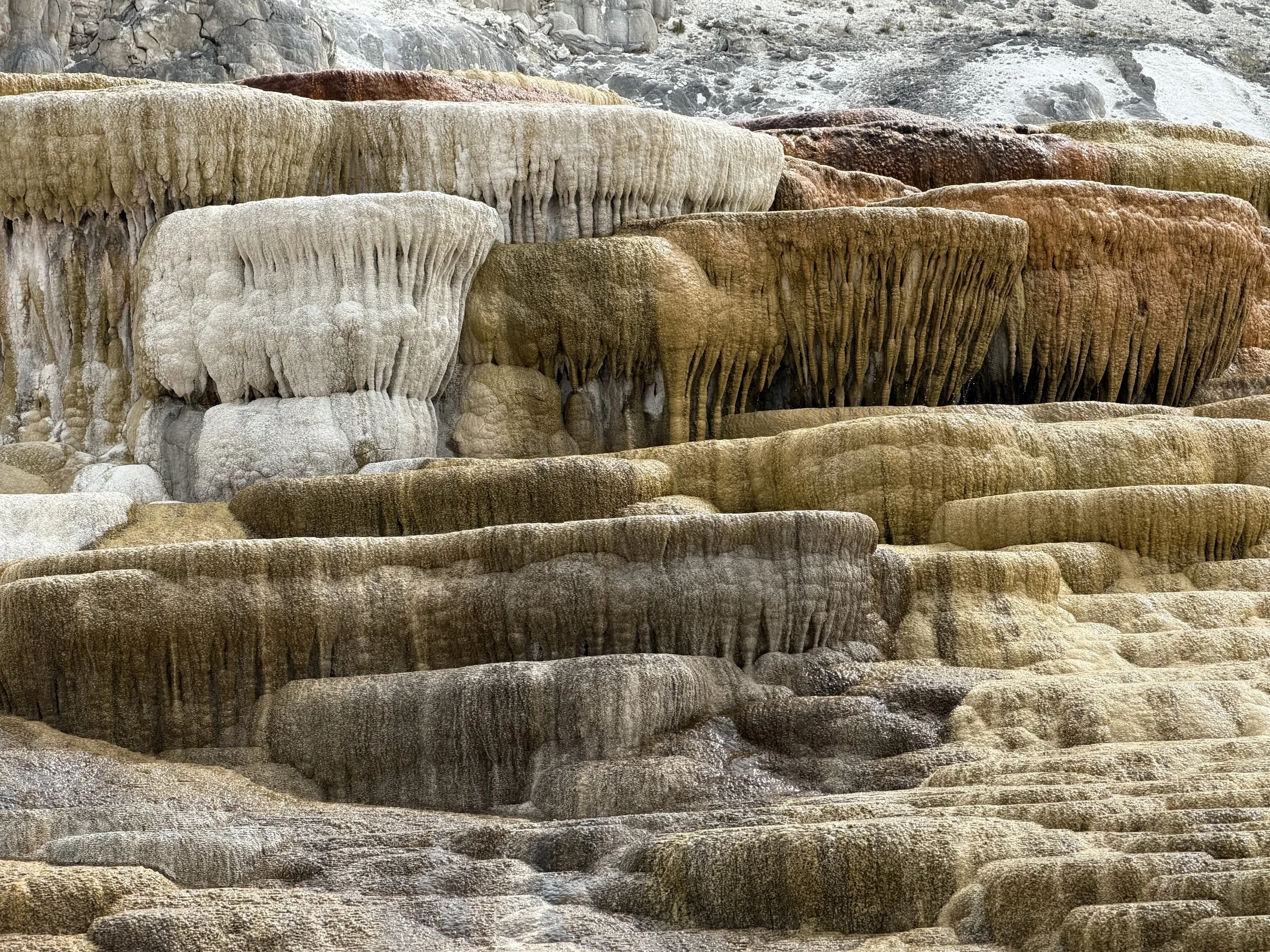
Yellowstone National Park
Plan your visit to America’s first national park without stressing that you’re missing out by not seeing every little bit.
Quick Overview
Trip length: 5 full days
Best for: first-time visitors, wildlife lovers, road trippers
Trip style: moderate activity, early mornings, flexible pacing
Yellowstone is enormous, and there isn’t one perfect order for seeing it. This itinerary breaks the park into geographic regions so you can spend less time backtracking and more time actually experiencing each area.
👉 The full itinerary gives you five flexible day plans that can be followed in order or rearranged based on where you enter, where you stay, and what matters most to you.
Why Yellowstone is Hard to Plan
Planning a trip to Yellowstone isn’t as straightforward as drawing a loop around the map.
The park is enormous, drive times add up quickly, and wildlife, parking, weather, and geyser eruptions don’t care about your schedule. Trying to squeeze too many regions into one day can mean spending more time in the car than actually experiencing the park.
And unlike some parks, there isn’t one “correct” route. Where you enter, where you stay, and where you’re headed next completely changes what makes sense.
👉 Want to skip the guesswork and use a plan that’s flexible enough to work around Yellowstone?
This is a sample from the full itinerary—each day is structured like this with real-world notes and adjustments.
What This Itinerary Solves
How to structure 5 days without spending your trip constantly backtracking
Which areas of the park make sense to group together
Where to prioritize your time (and what to cut if you have fewer days)
How to plan around wildlife viewing, parking, and geyser predictions
How to stay flexible when Yellowstone changes the plan for you
👉 Yellowstone is enormous. A little structure helps you spend less time figuring out where to go next and more time actually experiencing the park.
Who This Itinerary Is For
This itinerary is built for people who want to experience Yellowstone’s different regions without turning five days in the park into a race.
This plan is a good fit if:
You’re visiting Yellowstone for the first time
You have about 5 days and want to experience the park’s major regions
Wildlife, geothermal features, waterfalls, and iconic Yellowstone scenery are all priorities
You’re comfortable with early starts when wildlife viewing is worth it
You want a clear plan but enough flexibility to stop for wildlife or wait for a geyser
You’d rather rearrange a proven plan around your trip than build one from scratch
This is probably not the best fit if:
You’re trying to see every part of Yellowstone in one trip
You want a hiking-heavy itinerary built around long backcountry trails
You prefer completely unstructured days with no advance planning
You’re unwilling to start early for wildlife or popular areas
You want to stay in one place and minimize driving as much as possible
👉 This is a flexible, high-impact plan for experiencing Yellowstone’s major regions, not a checklist of everything there is to see.
High-Level Itinerary
Day 1 — Mammoth Hot Springs + Northern Yellowstone
Make your way north and spend the day exploring Mammoth Hot Springs and some easy stops along the way.
💦 Wraith Falls + Undine Falls
Two easy additions to the route and the beginning of the guide’s optional “waterfall side quest.”
Mammoth Hot Springs
Explore the terraces, stop at the visitor center, and keep an eye out for elk around Mammoth.
📍 Optional: Gardiner + Roosevelt Arch
A good opportunity to grab groceries, ice, or gas before tomorrow’s early start.
👉 Tonight, prep breakfast and snacks so you can get on the road before sunrise for Lamar Valley.
Day 2 — Lamar Valley + Grand Canyon of Yellowstone
This is one of the fullest days of the trip: start with Yellowstone wildlife at sunrise, then spend the afternoon exploring its dramatic canyon and waterfalls.
🦬 Lamar Valley
Arrive around sunrise, bring binoculars or a spotting scope, and take your time exploring different areas of the valley.
💦 Grand Canyon of Yellowstone
Visit Artist Point, Upper Falls, Crystal Falls, and other viewpoints depending on your time and energy.
🥾 Optional: Brink of the Lower Falls
An incredible perspective, but remember that the very steep trail down means a very steep climb back up.
👉 Wildlife is never guaranteed. The full guide includes strategies for making the most of your morning even when the animals aren’t cooperating.
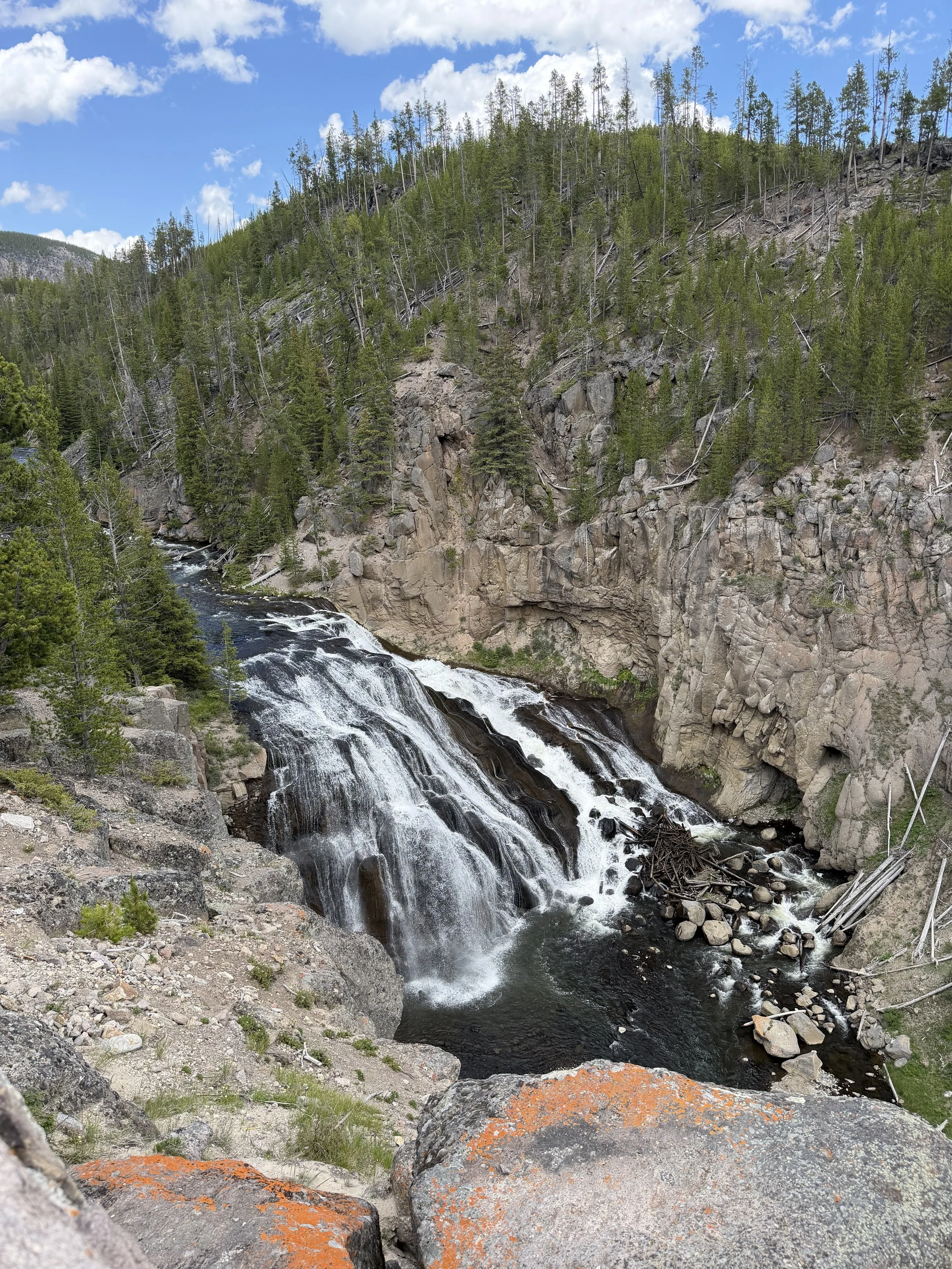
A lesser visited but worthwhile stop - Gibbon Falls!
Day 5 — Yellowstone Lake + West Thumb
Finish with a more flexible day around Yellowstone Lake before making your way south.
West Thumb Geyser Basin
Explore geothermal features right along the edge of Yellowstone Lake.
🌊 Yellowstone Lake + Fishing Bridge
Slow down, enjoy the lake, and add Storm Point Trail if weather and energy cooperate.
💦 Lewis Falls + Moose Falls
Two easy waterfall stops that fit naturally into the drive toward the South Entrance.
👉 Only have four days? This is the day I’d cut first rather than rushing the higher-priority regions.
Day 3 — Norris + Central Yellowstone
Slow things down with a day built around geothermal features, waterfalls, and some of Yellowstone’s quieter central stops.
Norris Geyser Basin
Explore both sections of the basin, see Steamboat Geyser, and look for the colorful bacterial mats.
💦 Gibbon Falls + Virginia Cascades
Easy waterfall stops that fit naturally into the day.
🥾 Optional: Little Gibbon Falls
Add a short hike if you want something beyond boardwalks and roadside stops.
👉 This is also a good day to cut stops or add Hayden Valley depending on your interests and energy.
Day 4 — Grand Prismatic + Upper Geyser Basin
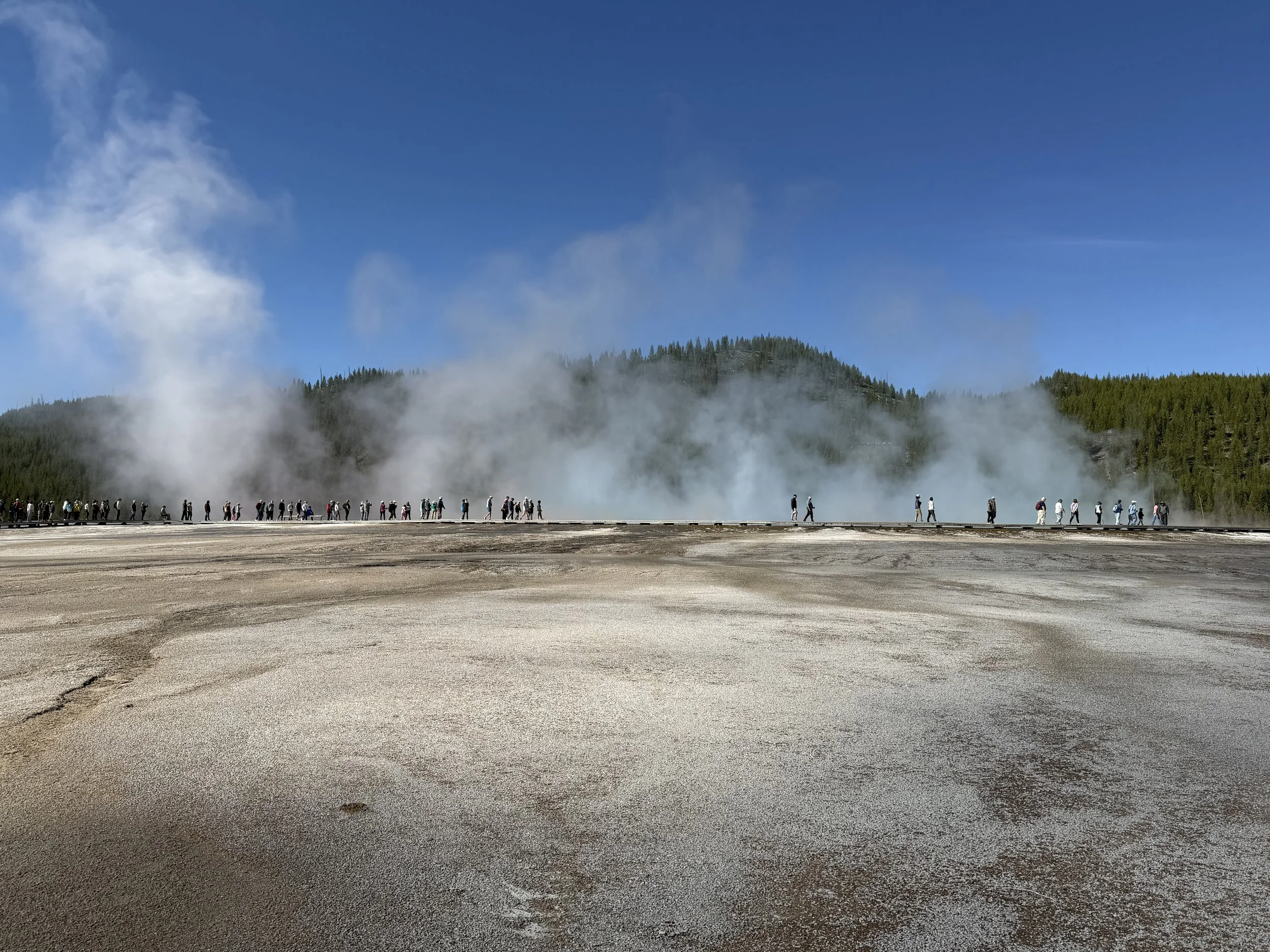
This is the iconic Yellowstone day: Grand Prismatic Spring in the morning, followed by an afternoon of geyser chasing around Old Faithful.
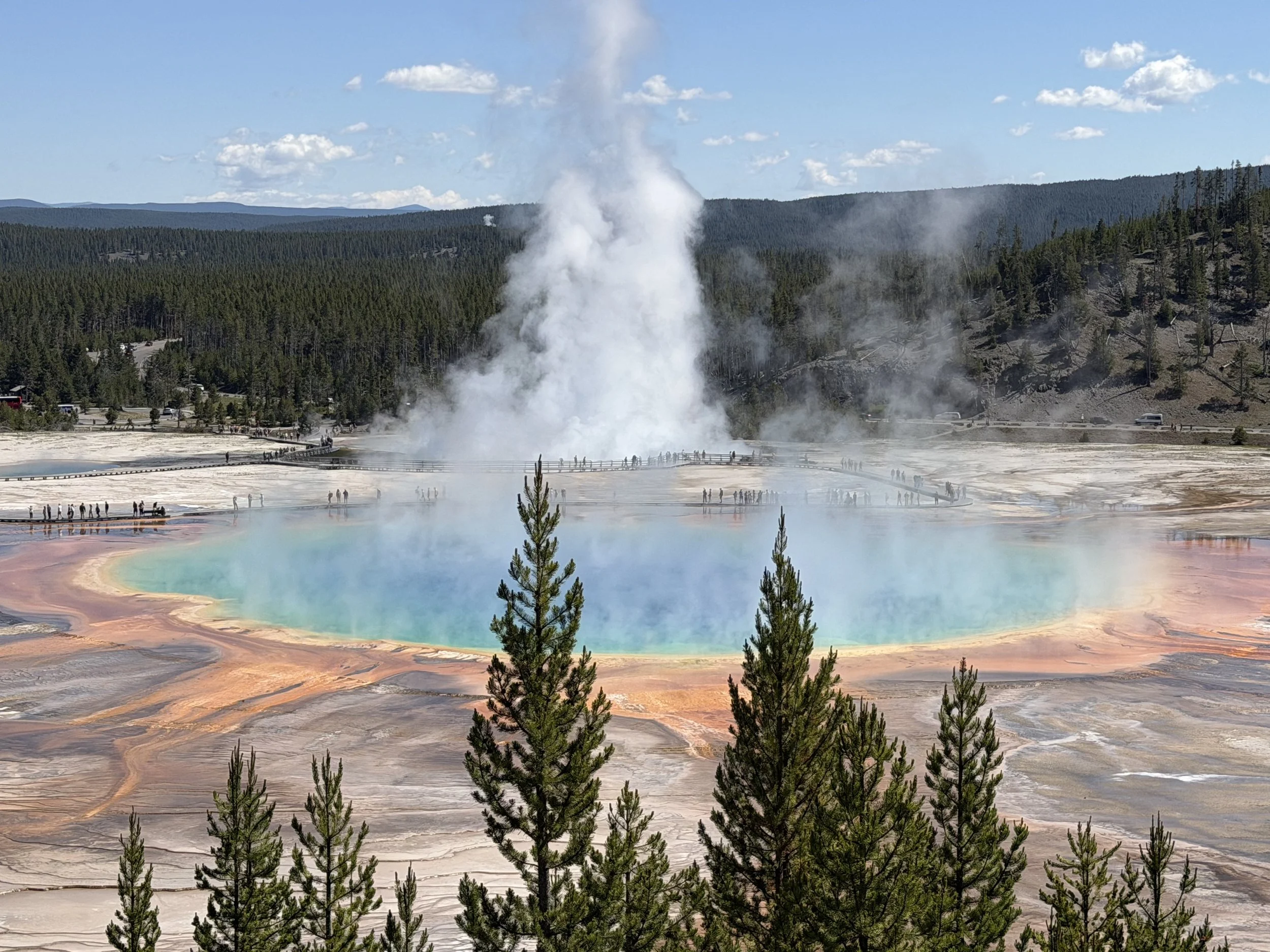
🌈 Grand Prismatic Spring + Overlook
See it from both perspectives, but drive between the two parking areas rather than adding unnecessary walking.
Old Faithful + Upper Geyser Basin
See Old Faithful, then use current eruption predictions to explore beyond it. Grand and Riverside Geysers are especially worth watching for.
⏱️ Leave the afternoon flexible
Some of the best experiences require waiting. Grand Geyser was one of the highlights of our entire trip.
👉 Don’t just see Old Faithful and leave. Give yourself time to see what else Yellowstone decides to do.
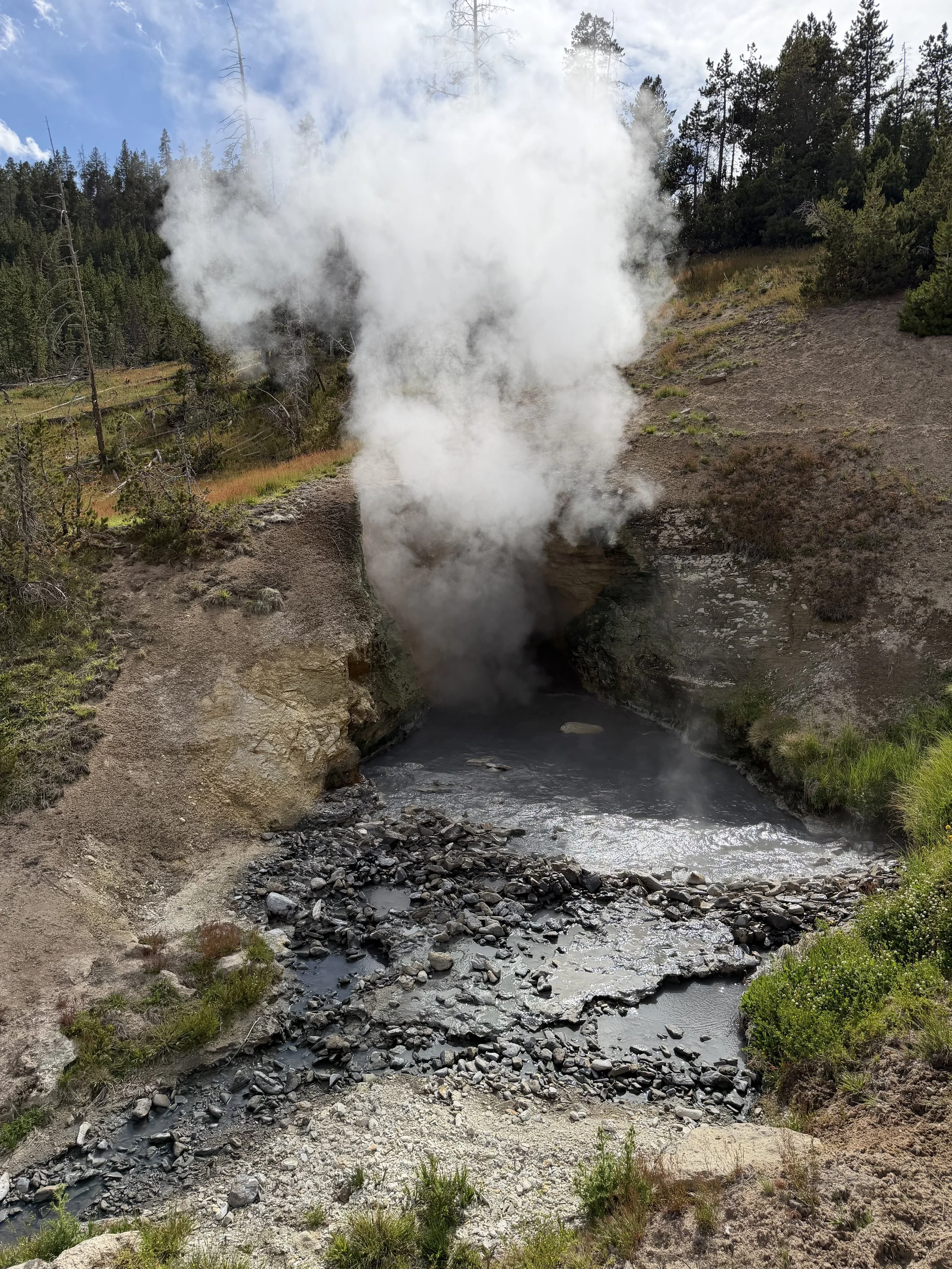
Make sure to check out the Mud Volcano but be prepared for the smell!
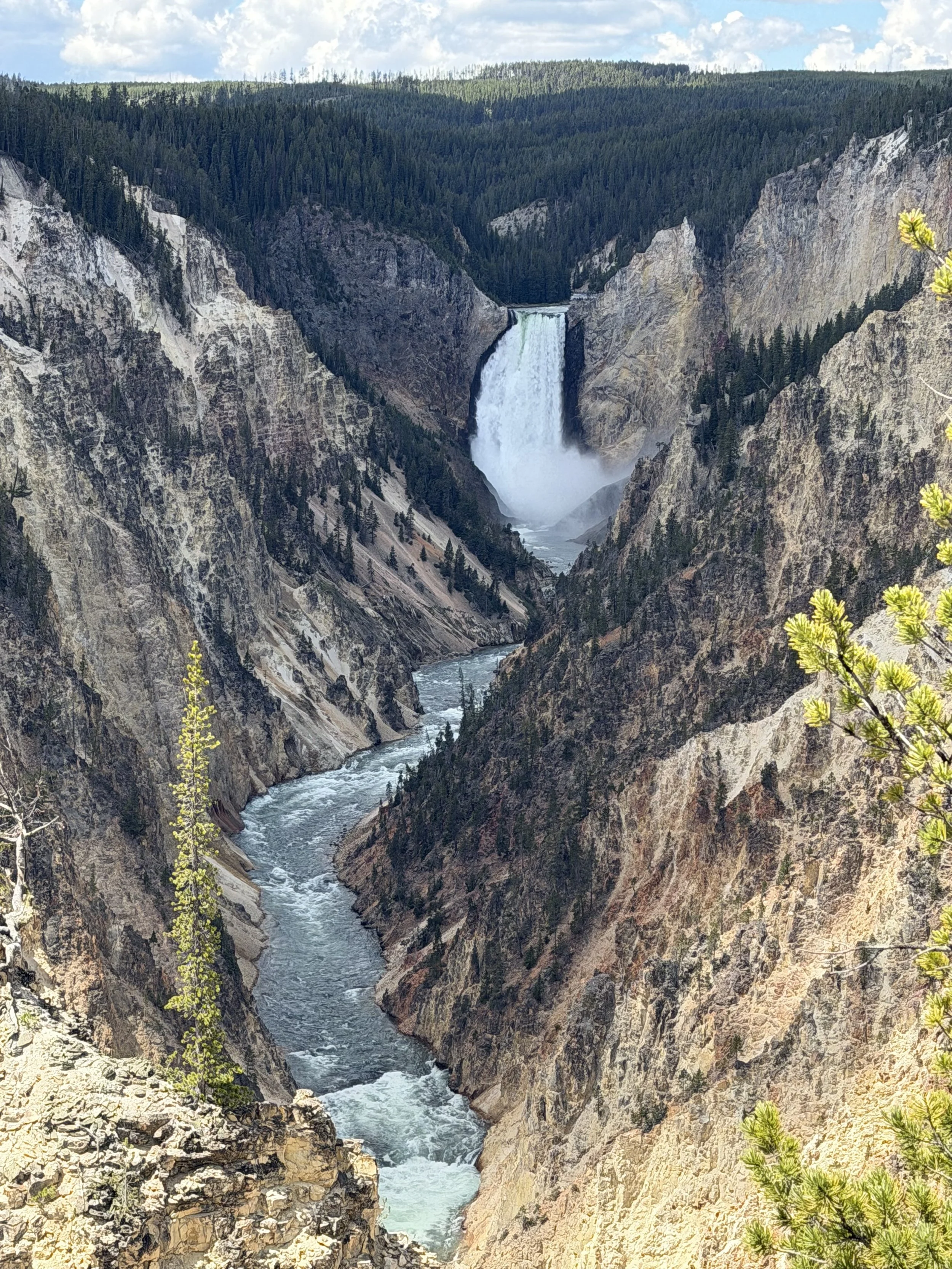
Views of Lower Yellowstone Falls and the “Grand Canyon of Yellowstone”
What’s worth it (and what to skip)
Worth prioritizing:
Yellowstone has a lot of famous stops, but the experiences that deserve your time aren’t always the ones you can check off fastest.
Lamar Valley at sunrise for wildlife viewing
Grand Canyon of Yellowstone, especially Artist Point and the major waterfalls
Grand Prismatic Spring + the overlook for two completely different perspectives
Upper Geyser Basin beyond Old Faithful — leave time to actually chase geyser eruptions
Easy waterfalls along your route like Wraith, Undine, Gibbon, Lewis, and Moose Falls
Lower priority:
Trying to see every geothermal basin just because it’s there
Squeezing too many regions into the same day
Making Old Faithful your only stop in the Upper Geyser Basin
Yellowstone Lake if you’re trying to shorten the trip to four days
👉 You don’t need to see all of Yellowstone to have a great Yellowstone trip. Prioritize the experiences that feel different from one another.
What to know before you go
Yellowstone is much bigger than it looks and drive times add up quickly
Wildlife viewing is best around sunrise and sunset, but sightings are never guaranteed
Cell service is extremely limited, so download maps before you arrive
Expect plenty of walking even without major hikes — we regularly hit 12,000–18,000 steps
Full parking lots often have faster turnover than they appear to
Leave flexibility for wildlife, weather, traffic, and geyser predictions
What I’d change
Stay two nights when possible — moving hotels reduced backtracking, but packing up every morning got old
Drive between Grand Prismatic and the overlook — walking between them added way more distance than expected
Start the waterfall side quest sooner — many of Yellowstone’s waterfalls take almost no extra effort when you’re already passing them
Leave even more time for geyser chasing — waiting for Grand Geyser ended up being one of the highlights of the trip
Cut the Lake area first if time is tight rather than rushing the higher-priority regions
👉 The full itinerary incorporates these lessons so you can benefit from the things we learned along the way.
What made this trip special
Some of our favorite time in Yellowstone was spent geyser chasing.
Instead of treating Old Faithful as a quick stop, we checked the eruption predictions, wandered the Upper Geyser Basin, and decided which geysers were worth waiting for. Catching Grand Geyser after choosing to stick around for its prediction window ended up being one of the highlights of the entire trip.
♨️ Sometimes the best plan is leaving enough room to wait and see what happens.
👉 The full itinerary builds in flexibility for experiences like this instead of scheduling every minute of your day.
Want this fully mapped out without having to figure it out yourself?
The full itinerary includes:
5 geographic day plans that make Yellowstone’s enormous size much easier to navigate
Guidance for rearranging the days based on where you enter, where you stay, and where you’re headed next
Clear priorities for wildlife, geothermal features, waterfalls, and Yellowstone’s major regions
Realistic timing so you know what actually fits into each day
Strategies for early starts, parking, wildlife viewing, and geyser predictions
Built-in flexibility for weather, wildlife, traffic, and unexpected eruptions
What I’d do differently after actually taking this trip
👉 Designed to give you the structure you need without locking you into a rigid Yellowstone itinerary.